Last updated: Tuesday, November 24, 2026, 11 a.m. by OR3 Staff

⚠ THANKSGIVING WEEK: KING TIDES, LARGE WAVES AND STORMS

STAY AWAY FROM THE SHORELINE WEDNESDAY MORNING

King tides, among the highest tides of the year, are here this week. High tides come each morning, between about 9 a.m. and noon. On Wednesday morning, Nov. 25, the largest waves arrive on top of the high tide, which peaks around 9:30 a.m. Waves could reach about 30 feet in North and South County, with some up to 45 feet. Waves will be smaller in town.

National Weather Service alerts:

  • High Surf Warning: Wednesday
  • Coastal Flood Warning: through Thursday at 4 p.m.

Weather: Rain and wind of 20–30 mph through Wednesday morning, with some heavy downpours. Thanksgiving and Friday will be drier. Rain returns Friday night and this weekend. See the latest forecast.
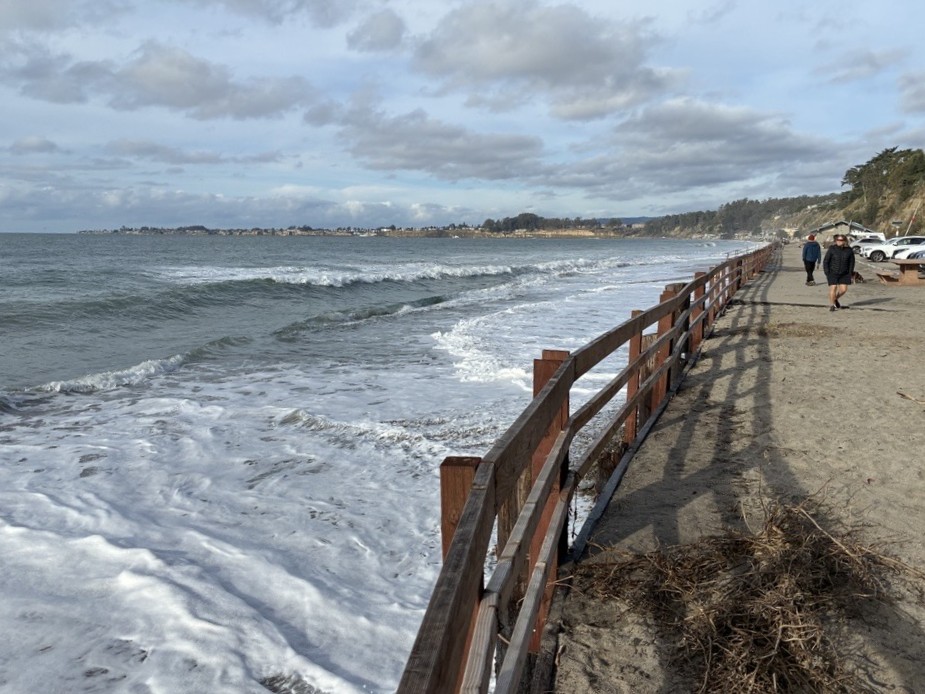
High tide reaching the shore at Seacliff in Santa Cruz County

If you visit the beach or tide pools over Thanksgiving:

  • Use caution, even at the evening low tide. Waves can rush far up the beach and over rocks.
  • Never turn your back on the ocean.
  • Move cars out of low parking lots before high tide.
  • Never walk or drive through flood water.

For real-time updates, check this page: santacruzcountyca.gov/OR3/Emergency.aspx

Get emergency alerts on your phone: Sign up at CruzAware.org, the County’s official warning system.

Tide times for Santa Cruz: Nov. 24–28, 2026

Water will likely be 1 to 2 feet higher than the numbers below. These are tide predictions. They do not include storm surge or large waves. Learn why in Coastal Flooding & King Tides.

Highest tide each day in Santa Cruz, Nov. 24 to 28, 2026
Day Highest tide
Tue., Nov. 24 8:50 a.m. – 6.6 ft
Wed., Nov. 25 9:33 a.m. – 6.7 ft (highest)
Thu., Nov. 26 10:20 a.m. – 6.6 ft
Fri., Nov. 27 11:11 a.m. – 6.3 ft
Sat., Nov. 28 12:08 p.m. – 5.8 ft

Source: NOAA tide predictions for Santa Cruz. Heights are in feet above the average daily low tide. See all NOAA tide times for Santa Cruz.

⚠ EVACUATIONS: KNOW YOUR ZONE

EVACUATION WARNING

Get ready to leave. Go now if you need extra time, have pets or livestock, or need help moving.

EVACUATION ORDER

Leave now. There is a threat to life.

Check the map for current evacuation warnings and orders. Type your address to find your zone, or open the map in a new window.

Winter storms far out at sea can send huge waves to our coast, even on sunny days. “Sneaker waves” can rush far up the beach without warning.

  • Stay off beaches, rocks, jetties and cliff edges during high surf.
  • Never turn your back on the ocean.
  • Keep children and pets away from the water’s edge.
  • Do not go near the shore to watch or take photos of big waves. No photo is worth your life.
  • If someone is swept into the water, do not go in after them. Call 911.

High tides and big waves can flood low areas near the coast, even places that do not usually flood. The highest tides of the year, called king tides, happen in winter.

Water levels could be higher than normal this winter. Several things are adding up. El Niño is raising sea levels along our coast. Warm water takes up more space, which pushes the sea level up. Slow-moving ocean “bulges” called Kelvin waves are carrying extra water toward California. Some beaches also have less sand right now, so waves can reach farther up the shore.

Storm surge is extra water pushed toward land by strong winds and low air pressure during a storm. When storm surge and big waves come at the same time as a high tide, water can reach much higher than the tide table shows.

  • If you live or work near the coast, know your evacuation zone.
  • Move cars out of low parking lots before big tides or storms.
  • Never walk or drive through flood water. It can hide holes, debris and fast water.
  • Use sandbags to help keep water out. Find sand and sandbag locations (unincorporated areas).

Check NOAA tide times for Santa Cruz.

Heavy rain can make creeks and rivers rise fast. Wet soil can cause landslides and mudflows, especially on steep slopes.

  • Never drive through a flooded road. Turn around, don’t drown.
  • Clear gutters, drains and ditches before storms.
  • Watch for cracks in the ground, leaning trees or poles, or doors and windows that suddenly stick. These can be signs that the ground is moving.
  • If you hear rumbling, cracking trees or rocks knocking together, leave right away.
  • Check rainfall and river levels.

Strong winds can bring down trees and power lines. Outages can last for days.

  • Tie down or bring in loose outdoor items, like patio furniture.
  • Never go near a downed power line. Call 911.
  • Keep flashlights, batteries and power banks ready.
  • Run generators outside only, far from windows and doors.
  • Plan how to stay warm without power.
  • Check PG&E power outages.

Official updates

Conditions

Report a problem

Local news: KSBW, KION, KAZU, KSQD, Santa Cruz Sentinel, Good Times, Lookout Santa Cruz

Please follow local news or official media accounts at www.facebook.com/countyofsantacruz for updates and additional information.